

유용한 소식
Risk of alcohol-related facial flushing. Learn about facial flushing and drink 본문
Food related health information
Risk of alcohol-related facial flushing. Learn about facial flushing and drink
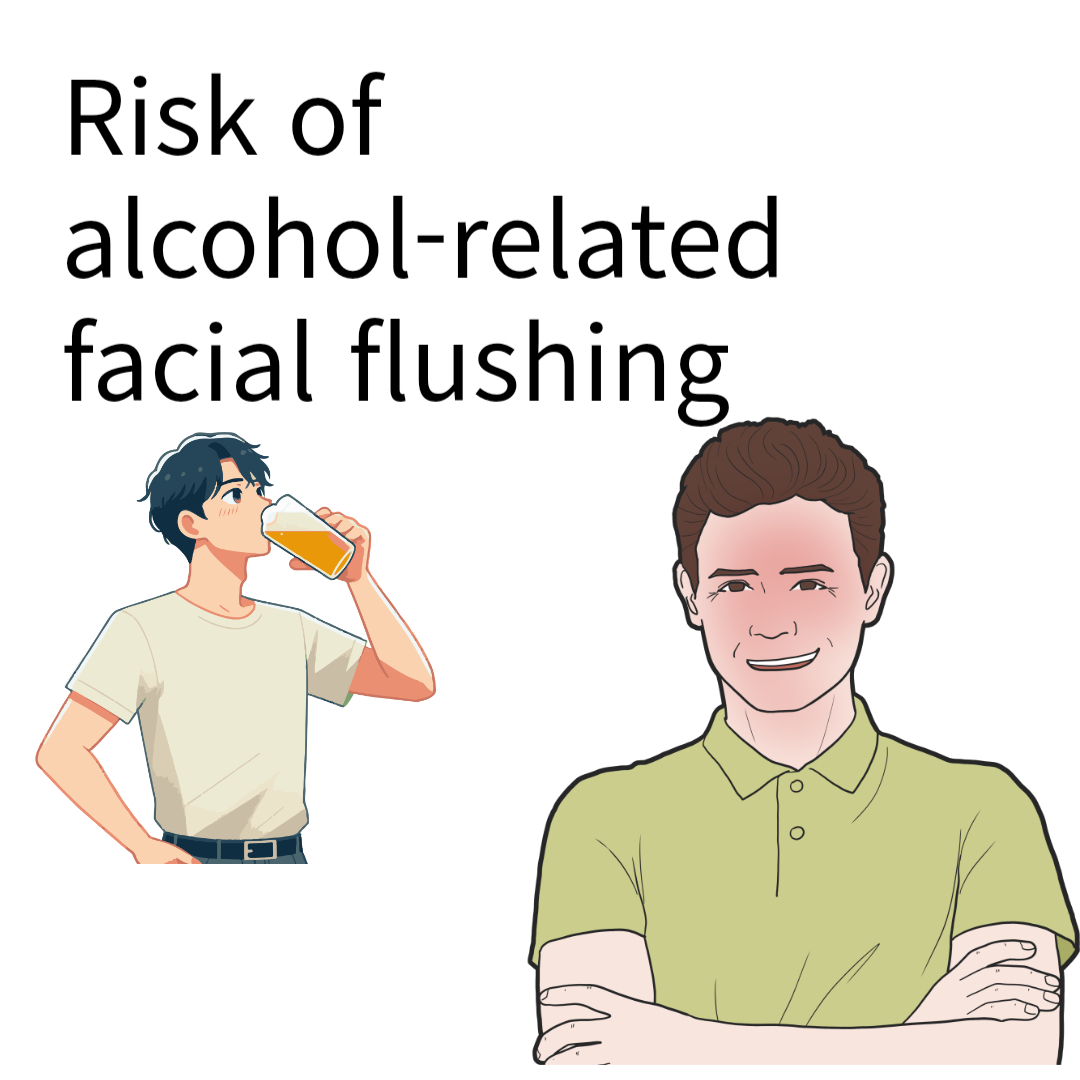
감성아재권 2024. 4. 21. 10:53Some people's faces turn very red when they drink alcohol. How about you? This is due to alcohol-related facial flushing(facial redness). People with severe alcohol-related facial flashes are at risk for fatty liver disease and various cardiovascular diseases. In this post, we will learn about the risks of alcohol-related facial flushing.
References
- April 17, 2024 Korea’s Health Chosun
- Korea News 1, November 30, 2023
- Korea's Weekly Chosun, October 31, 2023
Alcohol-related facial flushing meaning
- When alcohol enters our body, it is converted into a toxic substance called acetaldehyde.
- Our body needs acetaldehyde-decomposing enzyme to break it down.
- Patients with alcohol-related facial flushing lack acetaldehyde-decomposing enzyme in their bodies.
- If there is a lack of enzymes, blood circulation is promoted to excrete toxic substances.
- At this time, the face, where more capillaries are distributed than other areas, becomes particularly red.
- Genetically, Korean/Chinese/Japanese people lack the function of acetaldehyde decomposition enzyme compared to Western people.
Risk of alcohol-related facial flushing
These people are advised not to drink alcohol at all for the following reasons.
- Due to lack of alcohol-metabolizing enzymes, toxic substances in the body increase rapidly even with a small amount of drinking.
- People whose faces turn red easily are more likely to have liver diseases such as fatty liver.
- The risk of fatty liver disease in drinkers with alcohol-related hot flashes is 2.35 times that of non-drinkers (for drinkers without alcohol-related hot flashes, the risk of fatty liver disease is 1.9 times that of non-drinkers).
Fatty liver is not the only problem.
- As the concentration of acetaldehyde in the blood increases, HDL cholesterol levels decrease (HDL cholesterol, called ‘good cholesterol’, removes excessive cholesterol, the main cause of vascular disease).
- If you are born with a lack of acetaldehyde decomposition ability, your risk of developing cardiovascular diseases such as ‘variant angina’ caused by vasoconstriction increases.
- People who blush after one or two drinks have a 1.34 times higher risk of developing angina or myocardial infarction than people who do not blush (Hanyang University Emergency Medicine Research Team)
- If a person whose face turns red also smokes, the risk of developing cardiovascular disease is 2.6 times higher.
- Therefore, people with severe alcohol-related facial flushing are at risk of cardiovascular diseases such as angina pectoris.
Precautions for patients with alcohol-related facial flushing
- When time passes and your red face becomes pale again, people mistake it for being sober.
- However, this is due to decreased sensitivity to alcohol and a dulled body response. In fact, it is the result of our body adapting to drinking situations.
- The return of your complexion is a sign that you have drank too much.
- If you must drink alcohol, drink water frequently while drinking to lower the alcohol level in your body.
In this post, we learned about the risks of alcohol-related facial flushing. Please remember this carefully and take good care of your health
'Food related health information' 카테고리의 다른 글
| Foods to avoid in the morning. Don't eat this in the morning. (0) | 2024.04.23 |
|---|---|
| Water efficacy. Is it good? I need to drink it… (0) | 2024.04.21 |
| 6 foods that should not be stored in the refrigerator. Take it out now! (0) | 2024.04.21 |
| Banana side effects. Even if it’s delicious, let’s eat it right away! (0) | 2024.04.20 |
| Good food for fatty liver. Eat covered! (0) | 2024.04.15 |
'Food related health information' Related Articles
more


